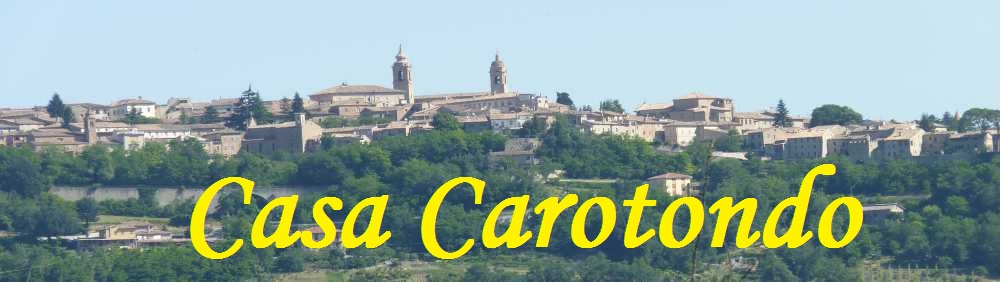
The medieval town of San Ginesio, Le Marche, Italy
Self-catering holiday apartments near the Sibillini Mountains in Le Marche, Italy
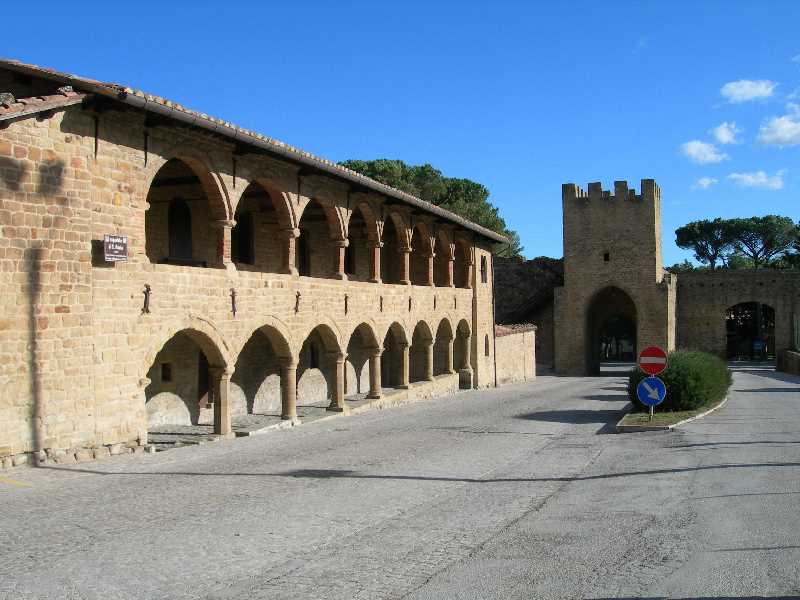
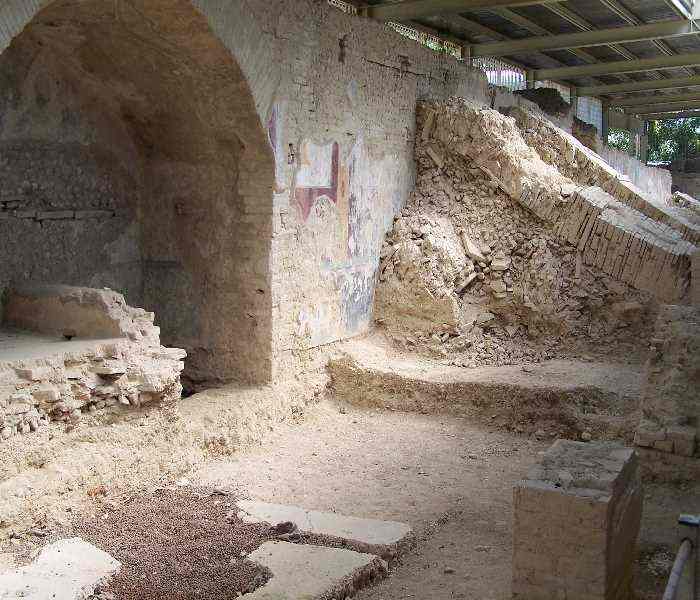
Visit historical remains in Le Marche
The Romans were the first people to leave any lasting evidence of their architecture. The most notable excavation in the area is of the town Urbs Salvia. The town of Piane di Falerone uses its Roman theatre for outdoor performances in summer.
A number of castles were built during the medieval era in the Camerino area by the wealthy and powerful da Varano family . Some have been restored and are worth visiting. Of particular interest are the Castello Pallotta in Calderola (unfortunately currently closed) and La Rancia in Tolentino. Information about these and many others can be found on the castle website.
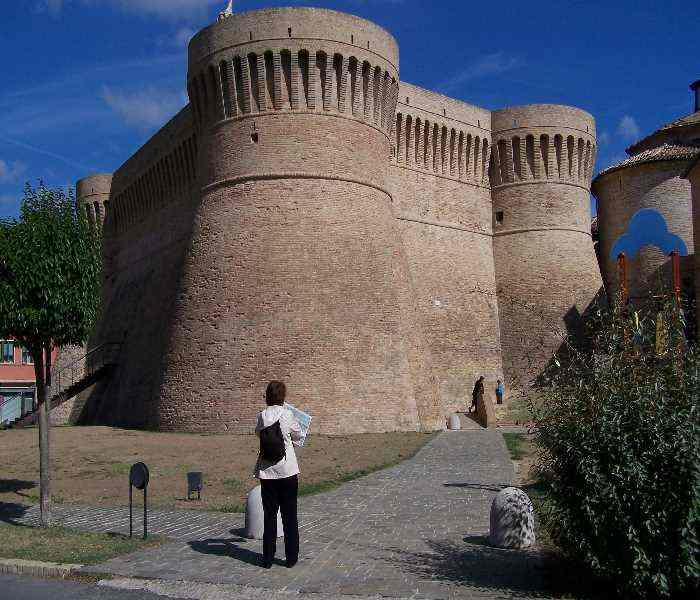
Le Marche has many medieval hilltop towns
Most of the towns in the area around Casa Carotondo have medieval centro storico. Many of these have, in recent years, been the subject of renovation and are well worth visiting especially since even the smaller towns can boast a number of architectual and artistic treasures. Especially noteworthy are the larger towns Macerata, Tolentino and Camerino and slightly further afield Ascoli Piceno and Fermo. However even the smaller towns surrounding Casa Carotondo such as San Ginesio , first mentioned in documents in 995 AD or Sarnano, which became a free commune in 1265, have much to offer. The medieval town is well preserved as all modern building has taken place outside of the historical centre.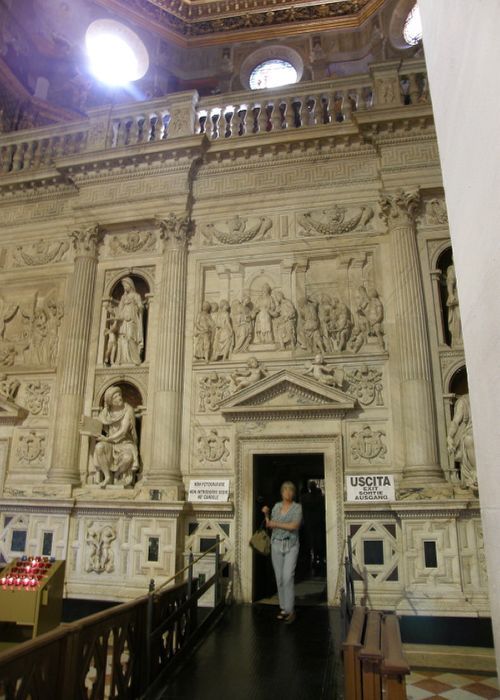
Religious history in Le Marche
Religion has, of course, played a very important role in the historical development of the area. Not least because the Marche was once part of the Papal Lands. Saint Benedict, the patron saint of Europe, was born in Norcia on the Umbrian side of the Sibillini Mountains. Saint Francis spent some time in Sarnano in the years 1214-1215. Important among the many basilica and churches in the area is the Basilica of Loretto , an important pilgrim destination, which is said to contain the house of Mary brought all the way from Nazareth. The Basilica of St. Nicola in Tolentino has recently been beautifully restored. The Abbey of Fiastra, started in 1142, was partly built using the stones from the ruins of the Roman town of Urbs Salvia. The Abbey is in a nature reserve with walks and cycle routes to enable vistors to enjoy the scenery.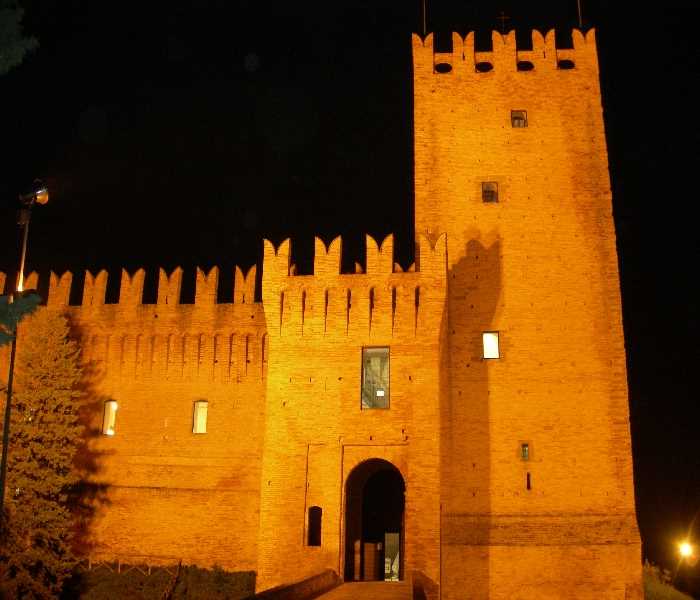
Art in Le Marche
While the Marche cannot be said to have been at the forefront of Renaissance art, there are important pieces on show in the region. Carlo Crivelli made Ascoli Piceno his home and examples of his work are exhibited throughout the Marche. The nearest one to Casa Carotondo is at Monte San Martino. Paintings by Lorenzo, Lotto, Titian and others are to be seen at various locations. For those who perfer modern art there is a small gallery at Ripe San Ginesio. For detailed information about art in the Marche click here.For more art and culture, day trips to Umbrian towns such as Perugia or Assisi are possible. The drive goes through some beautiful scenery.
Famous people from Le Marche
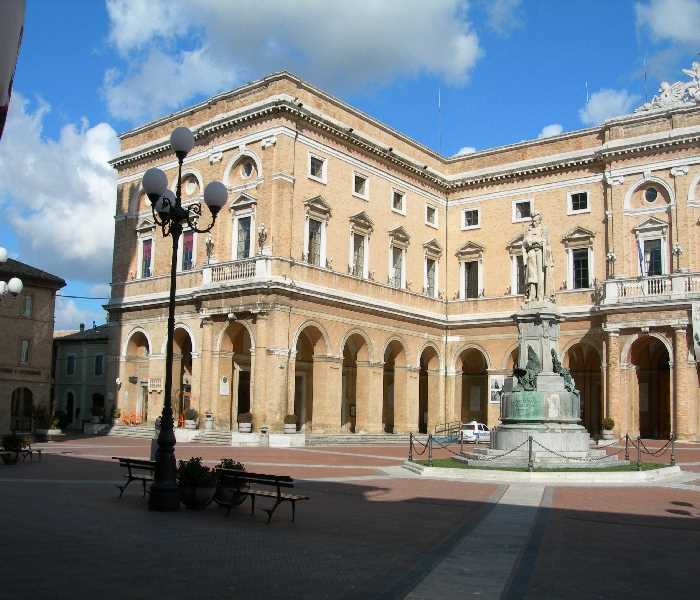
Another site worth visiting is the home of the famous Italian poet Giacomo Leopardi who was born and lived in the Marche in Recanati. It was Leopardi who first used the description 'Monti Azzuri' (blue mountains) in connection with the Sibillini Mountains. Recanati is a fine medieval town and birthplace also to the famous opera singer Beniamino Gigli. There is a museum in the town dedicated to him.Locally our most famous son was probably Alberico Gentili, born in San Ginesio, our commune town and one of the founding fathers of international law. Unappreciated in his home town during his life time he died in exile in London. There is now a centre for the study of his work in San Ginesio. For further details about his life read our blog. You can also find out about the life of Padre Matteo Ricci or various other famous Marchigiani.